students

  • Viewing school announcements as a Student or Parent

    Viewing school announcements as a Student or Parent

    Notice Board is used to share important, official announcements with students, parents, or staff.

    View Notices

    Where to Access

    • Login as Student/ Parent
    • Go to Message Center → Notice Board

    What You’ll See

    • 📌 Pinned notices (on top)
    • Latest notices below
    • Filters:
      • Search
      • Tag
      • Date

    Frequently Asked Questions

    Go to Message Center → Notice Board.

    You may not be part of the selected audience (grade/division/school).

    Pinned notices are important announcements shown at the top for easy access.

    No. Notices are for viewing only and do not allow interaction.

    Yes. Use filters like Search, Tag, or Date to find specific notices.

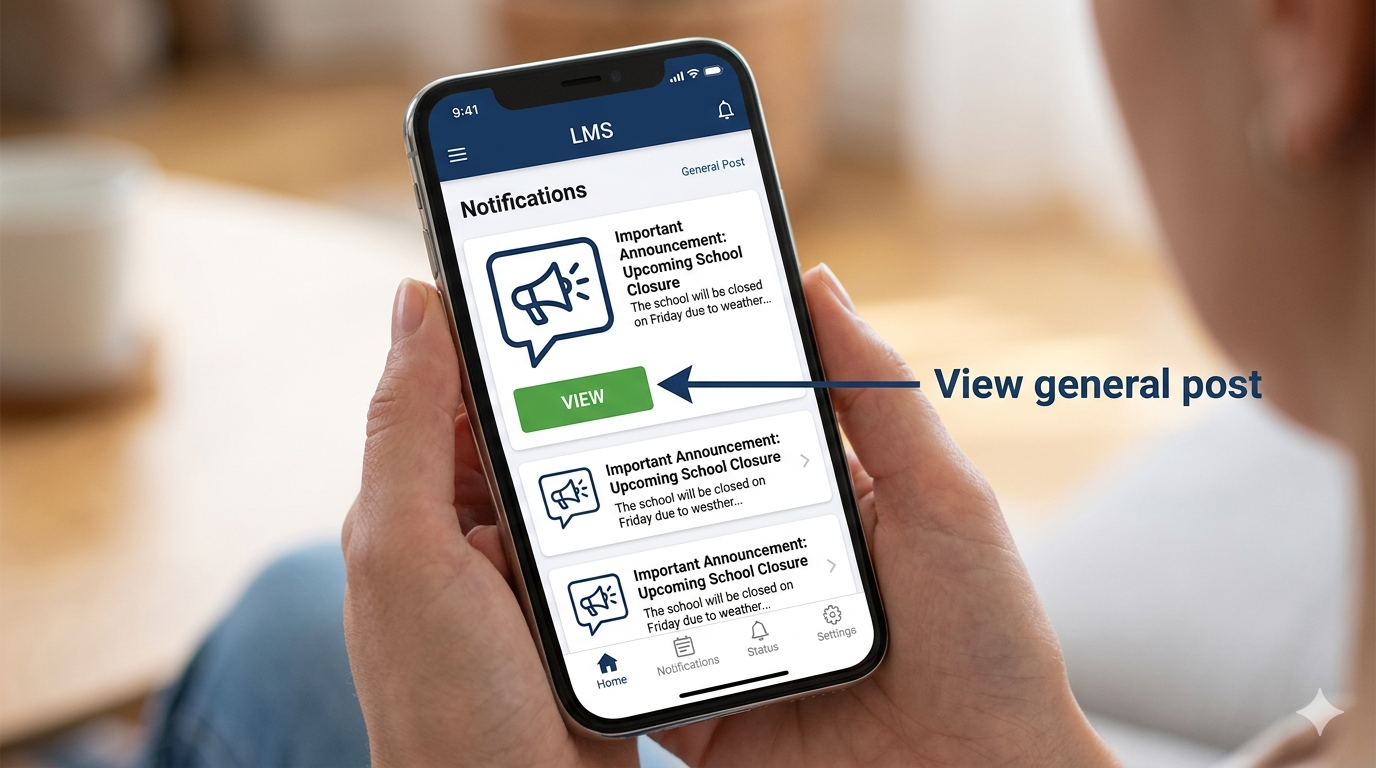
  • View General Post

    View General Post

    General Post is used to share non-homework updates within a group.

    View Posts

    Where to Access

    • Message Center → Group

    What You Can Do

    • Read updates
    • View attachments
    • Comment (if enabled)
    • Cannot create posts

    Frequently Asked Questions

    Go to Message Center → Your Group (Subject/Mentoring).

    Yes, but only if the teacher has enabled comments.

    You may not be part of the selected group.

    Yes. Click on the attachment to view or download it.

    General Post → Class-level updates Notice Board → Official announcements

  • How Parents Can View Student Attendance

    How Parents Can View Student Attendance

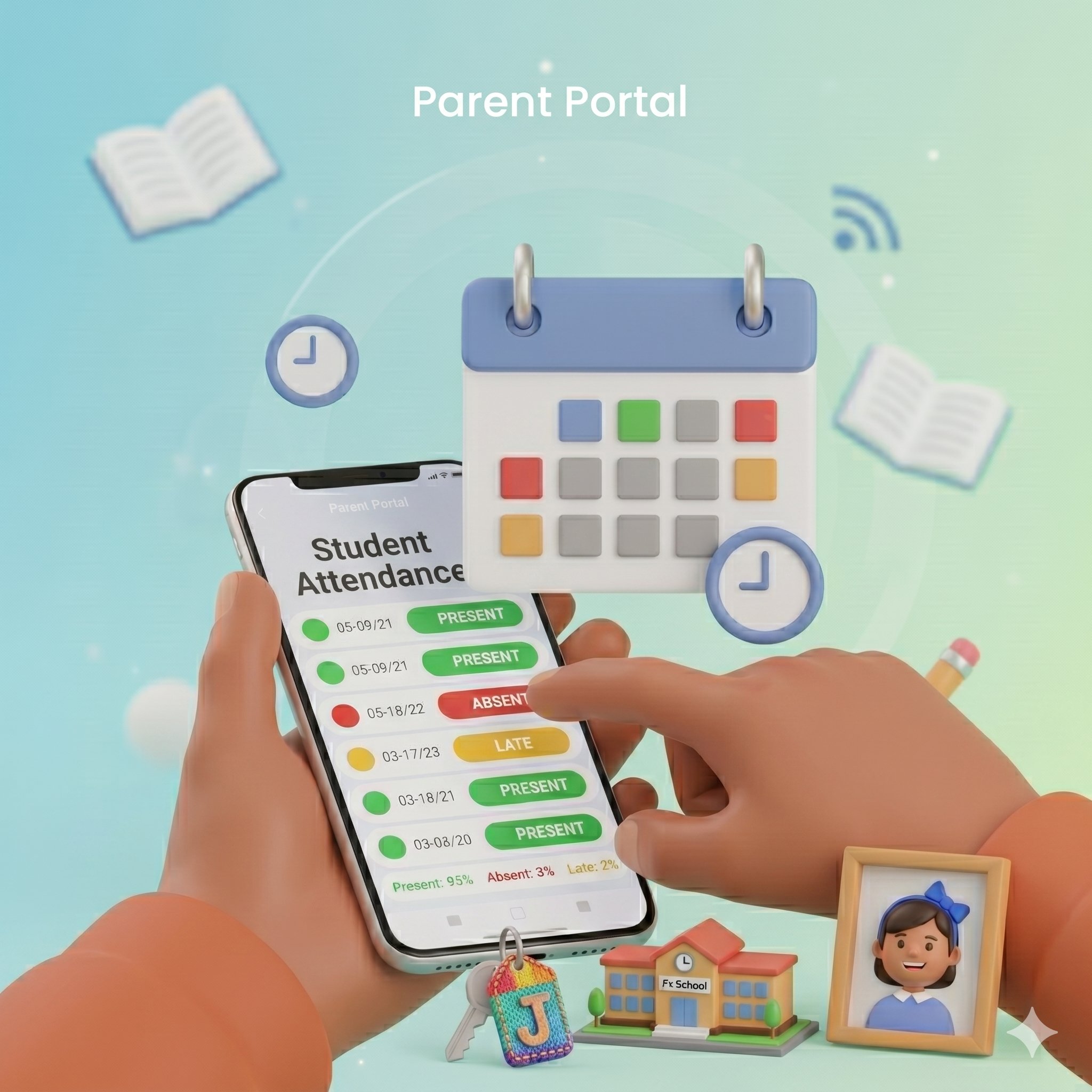
    This guide explains how parents can check their child’s attendance using the LMS Parent App.

    Table of Content

    Using the Attendance feature, parents can:

    • View daily attendance status
    • See monthly attendance summary
    • Check if the child was present, absent, late, or left early
    • Review past attendance records
    • Track attendance trends

    Quick Video Guide

    View Today’s Attendance from the Dashboard

    Parents can quickly check the child’s attendance from the home screen.

    The attendance indicator appears next to the student’s name on the dashboard.

    What the attendance status mean?

    The system may show the following status:

    • P – Present
    • A – Absent
    • NT – Not Taken (attendance not yet marked)
    • H – Holiday

    View more details

    Tap the attendance indicator to open the full attendance page. This will show detailed attendance information.

    Open the Attendance PageView Today’s Attendance from the Dashboard

    Parents can also open the attendance section from the main menu.

    Steps to open the attendance page

    1. Tap More from the bottom navigation menu.
    2. Select Performance.
    3. Tap Attendance.

    This will open the Attendance page.

    View Attendance SummaryOpen the Attendance PageView Today’s Attendance from the Dashboard

    When the attendance page opens, the Statistics view appears by default.

    This page shows a quick overview of the child’s attendance for the selected month.

    Information shown in the summary

    The statistics view includes:

    • Monthly attendance percentage
    • A visual attendance summary
    • Weekly attendance trend

    This helps parents understand the student’s attendance pattern.

    Understand the Attendance Status CardsView Attendance Summary

    At the top of the attendance page, parents will see attendance summary cards.

    These cards show the total number of days for each status.

    Attendance status cards include

    • Present – Green
    • Absent – Red
    • Late – Amber
    • Left Early – Purple

    Each card shows the number of days and the percentage for the selected month. Parents can tap any card to filter the attendance view.

    View Daily Attendance Details

    Parents can scroll down to see day-wise attendance records.

    Information shown for each day

    Each attendance record shows:

    • The date
    • The attendance status
    • The time when attendance was recorded
    • Notes added by the teacher (if available)

    This helps parents understand why a student was late or left early.

    Switch to Calendar View

    Parents can also see attendance using the calendar view.

    How to open calendar view

    Tap the Calendar tab on the attendance page.

    The calendar shows attendance for each day of the month.

    Color indicators used in the calendar

    • Green – Present
    • Red – Absent
    • Amber – Late
    • Purple – Left Early

    Parents can tap any date to view more details.

    Check Attendance for a Specific Date

    Parents can tap a date in the calendar to view the attendance details for that day.

    Details shown

    The system will show:

    • Attendance status
    • Time when attendance was marked

    Any notes added by the school

    View Previous Attendance 

    Parents can review attendance from earlier months or academic years.

    Change the month or academic year

    Tap the month selector or the Academic Year dropdown at the top of the screen.

    Choose the duration you want to review.

    The attendance information will update automatically.

    User Guide

    Important Information

    • Attendance is recorded and updated by the school.
    • If attendance is not yet marked, the status may show Not Taken (NT).
    • Attendance details may include notes added by teachers.

    Need Help?

    If you have questions about your child’s attendance, please contact the school.

  • View Almanac (Students and Parents)

    View Almanac (Students and Parents)

    Almanac is the centralized academic calendar module within the K-12 LMS. It provides a structured and reliable source of information for all school-related events, including academic activities, examinations, holidays, vacations, and institutional events.

    Parent and Student Guide (Desktop & Mobile App)

    Access Almanac

    • Mobile App (ios and Android)
      • Login to your account
      • Navigate to More –> Almanac
      • Events are displayed in a list format
      • Apply filters to customise view
      • Use left and right arrows to switch months or tap the month name to change month or academic year

    • Desktop (Web)
      • Login to your account
      • Navigate via Side Navigation to Calendar –> Almanac
      • Events are displayed in a calendar format
      • Apply filters to customise view
      • Use left and right arrows to switch months

    Default View & Navigation

    • Current month opens as default
    • Mobile app auto-scrolls to current date
    • Event Detail contains Event name, Date, Time and Description

    Frequently Asked Questions (FAQs)

    You can access the Almanac by navigating to:
    More → Almanac in the mobile application.

    The Almanac includes all important school events such as:

    • Exams
    • Holidays and vacations
    • PTMs
    • School functions
    • Academic and co-scholastic activities

    No. The Almanac is read-only for parents and students.
    Events are created and managed by the school administration.

    A single day may include multiple school activities such as exams, competitions, or meetings.
    The Almanac displays all events scheduled for that day so you can stay fully informed.

  • Library User Manual

    PRODUCT CONTEXT:

    The Library module provides visibility into a student’s reading activity within the school’s physical library. It displays books issued to the student, their expected return dates, overdue indications, and return confirmations. The module helps parents and students stay informed about reading habits and ensures timely returns to support responsible academic behavior.

    FEATURE DESCRIPTION:

    The Library module automatically receives book issuance and return updates from the school’s library management system (Skolaro). It displays this information in a structured, easy-to-understand format within the LMS on both web and mobile platforms. Parents and students receive notifications when a book is issued, returned, or overdue.

    PLATFORMS SUPPORTED:

    • Web
    • Mobile

    PERSONAS INVOLVED:

    • Parent
    • Student

    BUSINESS RULES:

    • Skolaro (3rd-party) triggers issue/return events to LMS via API.
    • LMS stores and displays these events in the Library tab under Student Profile.
    • LMS computes overdue status automatically when expected return date has passed without a return event.
    • Data is displayed in tabular (web) or card (mobile) format with clear status indicators.

    PERMISSIONS LOGIC:

    • Student_Library_View — Allows students to see the Library module.
    • Parent_Library_View — Allows parents to see the Library module for their child.

    NOTIFICATIONS:

    • In-app notifications for Parents and Students:
    – When a book is issued
    – When a book is returned
    – When a book becomes overdue

    1. Introduction

    The Library feature provides a transparent and structured view of a student’s reading activity through the school library. It exists to:

    Why the Feature Exists

    • Promote awareness of students’ reading habits.
    • Improve communication between school and home regarding library engagements.
    • Encourage timely return of borrowed books.

    What Problem It Solves

    • Parents currently have limited visibility into library interactions.
    • Students often forget return dates due to lack of reminders or centralized tracking.
    • Schools face overdue returns, causing operational delays.

    Who Benefits

    Parents — visibility into reading choices and responsibility habits.
    Students — a clear view of borrowed books and reminders.
    School stakeholders — reduced overdue management load.

    How It Improves the System

    • Creates a unified academic profile by integrating library activity.
    • Reduces missed due dates through clear notifications.
    • Fosters positive reading behavior.

    2. Role-Based Access Overview

    RBAC Table

    RoleWeb AccessMobile AccessCreateEditDeleteView
    ParentYesYesNoNoNoYes (Parent_Library_View)
    StudentYesYesNoNoNoYes (Student_Library_View)

    LMS displays Library information only to Student & Parent personas.

    RBAC Logic

    • Access is purely view-only.
    • Permissions must be explicitly granted at user-role level.
    • Notifications are received regardless of permissions, but opening them will respect RBAC.

    3. Super Admin Guide

    3.1 Responsibilities

    • Oversee configuration of incoming APIs.
    • Ensure RBAC mapping is correct.
    • Monitor ingestion logs.

    3.2 Administration

    • Verify Skolaro → LMS API is active.

    3.3 Configuration

    • Maintain API credentials in secure configuration layer.

    3.4 Permissions

    • Ensure Parent_Library_View and Student_Library_View are assigned correctly.

    3.5 Reporting
    • Access ingestion reports and logs if required.

    3.6 Use Cases

    • Troubleshooting when ingestion fails.
    • Supporting school admins reporting missing transactions.

    4. HO Admin Guide

    HO admins do not access the Library feature.

    5. School Admin Guide

    School admins do not access the Library feature.

    6. Teacher Guide

    Teachers do not access the Library feature.

    7. Parent Guide (Web & Mobile)

    7.1 Access

    • Parent navigates: Student Profile → Library.
    • Requires Parent_Library_View permission.

    7.2 Default View & Navigation

    • Two tabs:
    History
    Library Analytics (basic placeholder)

    7.3 What Parents Can Do

    • View books issued.
    • View expected return date.
    • View returned books.
    • View overdue indicator.
    • Receive notifications.

    7.4 Notifications

    Parents receive:
    • Book Issued
    • Book Returned
    • Book Overdue

    7.5 Use Cases

    • Tracking child’s reading activity.
    • Ensuring timely book returns.

    8. Student Guide (Web & Mobile)

    8.1 Access

    • Student navigates: Profile → Library.
    • Requires Student_Library_View.

    8.2 Default View & Navigation

    Same UI as parent view.

    8.3 What Students Can Do

    • View their issued books and upcoming return dates.
    • Understand which books are overdue.

    8.4 Notifications

    Students receive the same 3 notifications as parents.

    8.5 Use Cases

    • Managing personal responsibility for borrowed books.

    9. How-To Guide

    How to View Library Books (Parents & Students)

    1. Log in to the LMS.
    2. Open the Student Profile.
    3. Select the Library tab.
    4. View the History list of books.
    5. Check the Return By date and status.

    How Overdue Works (System Logic)

    1. LMS checks expected return date.
    2. If today > expected return date AND returned event not received → status becomes Overdue.
    3. Overdue reminder notifications are triggered automatically.

    How Notifications Work

    1. Book Issued → Skolaro sends event → LMS triggers notification.
    2. Book Returned → LMS updates status → notification sent.
    3. Overdue → LMS computes & sends reminders.

    10. Feature Logic & Display Rules

    System Behavior

    • LMS stores each Skolaro event.
    • Status can be:
    – Issued
    – Returned
    – Overdue

    Display Hierarchy

    • Web: Table format
    • Mobile: Card format

    Sorting Rules

    • Latest issued books appear at the top.

    Data Grouping

    • Grouped by student profile.

    Visibility Rules

    • Only visible to Student & Parent personas with permissions.

    11. Notifications Overview

    Notification Types

    1. Book Issued
    2. Book Returned
    3. Overdue Reminder

    Triggers

    • Triggered automatically during ingestion or overdue processing.

    Audience

    • Parent
    • Student

    Redirection Behavior

    Each notification opens Library → History.

    12. Governance & Compliance Rules

    Business Rules

    • LMS is only the visibility layer; Skolaro remains the operational system.
    • No data editing is allowed in LMS.

    Permission Rules

    • Parent & Student only receive view access.

    Restrictions

    • No manual entries permitted.
    • No editing or deleting entries.

    System Validations

    • Validate payload completeness.
    • Validate enrollment mapping.
    • Log and handle malformed data.

    13. Frequently Asked Questions

    Q1. Why don’t I see any book records?
    The student has not taken any library books OR Skolaro has not sent an event.

    Q2. Why can’t I edit or delete an entry?
    Library operations occur only in Skolaro, not in the LMS.

    Q3. Why did I receive an overdue reminder?
    The expected return date has passed, and no return event was received.

    Q4. What if a book was returned but still shows overdue?
    The school may not have updated Skolaro yet.

    Q5. Who can view the Library module?
    Only Parents and Students with the appropriate RBAC permissions.

    14. Conclusion

    The Library module brings clarity and accountability to students’ reading activity by integrating Skolaro’s library data directly into the LMS. Parents and students benefit from transparent book history, timely reminders, and improved awareness of reading habits. By centralizing this information, the LMS strengthens academic communication and enhances the overall school–home ecosystem.

  • Transfer Certificate User Manual

    PRODUCT CONTEXT

    The Transfer Certificate (TC) feature is part of the Lighthouse K12 LMS ecosystem used by Lighthouse Learning schools. The feature enables parents to digitally raise a request when they intend to withdraw their child from the school.

    Traditionally, transfer certificate requests required physical visits to the school and manual paperwork. This feature digitizes the entire workflow within the LMS platform, allowing parents to submit requests directly through the system while enabling school administrators to review, approve, or request reconsideration.

    The TC feature ensures transparency, traceability, and efficient communication between parents and school administrators.

    FEATURE DESCRIPTION

    The Transfer Certificate feature allows parents to submit a formal request for a student’s exit from the school by providing a reason and feedback. Once submitted, the request is reviewed by the school administration.

    Administrators can either:

    Approve the request, allowing the TC process to proceed
    Ask the parent to reconsider, prompting a conversation before final approval

    The feature helps schools capture valuable feedback about student exits while ensuring the process is handled in a structured and auditable manner.

    PLATFORMS SUPPORTED

    PlatformAvailability
    WebAdmin access only
    MobileParent access
    BothNotifications

    Note: Parent TC functionality is currently mobile-first.

    PERSONAS INVOLVED

    • Head Office (HO) Admin
    • Principal/ School Admin
    • Parent

    Students are not directly involved in the TC process.

    BUSINESS RULES

    The TC feature operates under the following business logic:

    • Parents can raise a TC request only for the current Academic Year (AY)
    • The system automatically captures the current AY
    • Parents cannot edit or select the academic year
    • A parent cannot create multiple active TC requests simultaneously

    Existing request handling:

    • If an existing request is pending, parents cannot create another request
    • If an existing request is withdrawn, parents may create a new request

    PERMISSIONS LOGIC

    Access and actions depend on the user’s role.

    RoleCreateEditApproveReconsiderView
    HO AdminNoNoNoNoYes
    School AdminNoNoYesYesYes
    PrincipalNoNoYesYesYes
    ParentYesLimitedNoRespondYes

    Parents cannot edit requests after submission.

    NOTIFICATIONS

    The TC feature generates system notifications to keep stakeholders informed.

    Notification types include:

    In-app notifications
    Email notifications

    Notifications are triggered during:

    • Request submission
    • Request reconsideration
    • Request approval

    Cross-platform handling:

    If a user opens a notification on a platform where the TC module is unavailable:

    • The notification appears read-only
    • CTA buttons remain disabled
    • Clicking the notification marks it as read

    A toast message will display:

    “Transfer Certificate feature is not available on [platform] platform currently.”

    Example:

    “Transfer Certificate feature is not available on Web platform currently.”

    1. Introduction

    The Transfer Certificate feature digitizes the process of student withdrawal from the school.

    Schools often lose valuable insights into why parents choose to move their children to other institutions. This feature enables structured feedback collection during the exit process.

    The feature solves several operational challenges:

     • Eliminates manual paperwork
    • Allows parents to submit requests digitally
    • Provides schools with actionable feedback
    • Creates an auditable record of exit requests
    • Ensures controlled approval workflows

    Beneficiaries include:

     • Parents requesting student transfers
    • School administrators managing exits
    • Head Office teams monitoring retention trends

    2. Role-Based Access Overview

    RoleWeb AccessMobile AccessCreateEditDeleteView
    HO AdminYesNoNoNoNoYes
    Principal/ School adminYesNoNoNoNoYes
    ParentNoYesYesLimitedWithdrawYes

    RBAC Logic:

     • Parents initiate TC requests
    • School leadership reviews requests
    • HO Admin monitors data but does not intervene directly

    3. Super Admin Guide

    3.1 Responsibilities

     • Monitor TC activity across schools
    • Ensure policy compliance
    • Review analytics and trends
    • Ensure correct permissions are tagged

    3.2 Administration

     • System configuration of TC workflows
    • Monitoring TC data integrity

    3.3 Configuration

    Super Admin can configure:

     • Review analytics and trends
    • Ensure correct permissions are tagged

    3.4 Permissions

    Super Admin has:

     • Full system visibility
    • Configuration privileges

    3.5 Reporting

    Reports may include:

     • TC requests by school
    • Exit trends by academic year
    • Reasons for withdrawal

    4. HO Admin Guide

    4.1 Responsibilities

     • Monitor TC requests across all schools
    • Identify patterns in student exits

    4.2 Administration

    HO Admin may:

     • Review TC dashboards
    • Track school-level exit metrics

    4.3 Configuration

    HO Admin typically does not configure the TC module.

    4.4 Permissions

    HO Admin can:

     • View all TC requests
    • Export reports

    4.5 Reporting

    Typical reports include:

     • Monthly TC trends
    • Brand-level exit analysis

    5. School Admin/Principal Guide

    5.1 Responsibilities

     • Review TC requests raised by parents
    • Communicate with parents where necessary
    • Approve or request reconsideration

    5.2 Administration

    Admins manage the TC approval workflow.

    5.3 Event / Content Management

    Admins can:

     • View request details
    • Review reasons submitted by parents
    • Decide next action

    5.4 Permissions

    Admins can:

     • Approve TC requests
    • Mark requests as reconsidered

    5.5 Best Practices

     • Contact parents before approving TC
    • Use reconsider option to retain students where possible

    5.6 Use Cases

    Example:

     • Parent requests TC due to relocation
    • Admin approves after verification

    6. Parent Guide (Mobile)

    6.1 Access

    Parents access TC requests through the mobile application.

    6.2 Default View & Navigation

    Parents can navigate to:

    More → Transfer Certificate → Create Request

    6.3 What Parents Can Do

    Parents can:

     • Submit a TC request
    • Provide reason for exit
    • Share feedback
    • Withdraw request before approval

    6.4 Notifications

    Parents receive notifications when:

     • Request is reconsidered
    • Request is approved

    6.5 Use Cases

    Example:

    • Parent moving to another city raises TC request.

    7. Student Guide

    Students do not interact directly with this feature.

    8. Teacher Guide

    Teachers do not interact directly with this feature.

    9. How-To Guide

    How to Raise a TC Request (Parent)

    1. Open the mobile application
    2. Navigate to the More → Transfer Certificate
    3. Select Transfer Certificate Request
    4. Enter the reason for requesting TC and review
    5. Provide feedback if required
    6. Submit the request

    How Admin Reviews a TC Request

    1. Login to the LMS web portal
    2. Navigate to School Management → Transfer Certificate Requests
    3. Open the parent request
    4. Review submitted details
    5. Choose one action: Approve / Request reconsideration

    10. Feature Logic & Display Rules

     • Only one active TC request per student is allowed
    • Requests are displayed in card format
    • Statuses include:

     Pending
    Reconsider
    Approved
    Withdrawn

    Activity timeline tracks all status changes.

    11. Notifications Overview

    Notifications are triggered when:

    EventAudience
    TC Request SubmittedSchool Admin and relevant stakeholders
    TC ReconsiderationParent
    Continue with TCSchool Admin and relevant stakeholders
    TC ApprovedParent

    Notifications include:

     • In-app alerts
    • Email notifications

    12. Governance & Compliance Rules

    System validations ensure:

    • TC requests apply only to the current academic year
    • Duplicate requests for the same Student + School + AY are prevented

    Audit logs maintain a record of:

    • Request creation
    • Status changes
    • Approval actions

    13. Frequently Asked Questions

    Who can create a TC request?
    Parents.

    Why can’t I raise another TC request?
    An existing request is still active.

    Why can’t I edit my request?
    Requests cannot be modified after submission.

    What happens when the school asks me to reconsider?
    You will receive a notification and may discuss the request with the school.

    14. Conclusion

    The Transfer Certificate feature simplifies and digitizes the student withdrawal process while enabling schools to capture valuable feedback from parents.

    By centralizing requests within the LMS, the feature ensures transparency, accountability, and operational efficiency for parents, school administrators, and the Head Office.